

Starting a wellness journey for mental health improvement is not merely a lifestyle adjustment. It is a structural re-engineering of how you process trauma, manage addiction, and reconnect with your core purpose. According to recent industry analyses, individuals who engage in structured, holistic wellness programs report a 40% higher rate of sustained emotional stability compared to those relying on isolated coping mechanisms. This guide outlines the precise architectural steps to initiate this transformation, drawing on the proven methodologies of the Hallerman Group.
Understanding the Architecture of Wellness
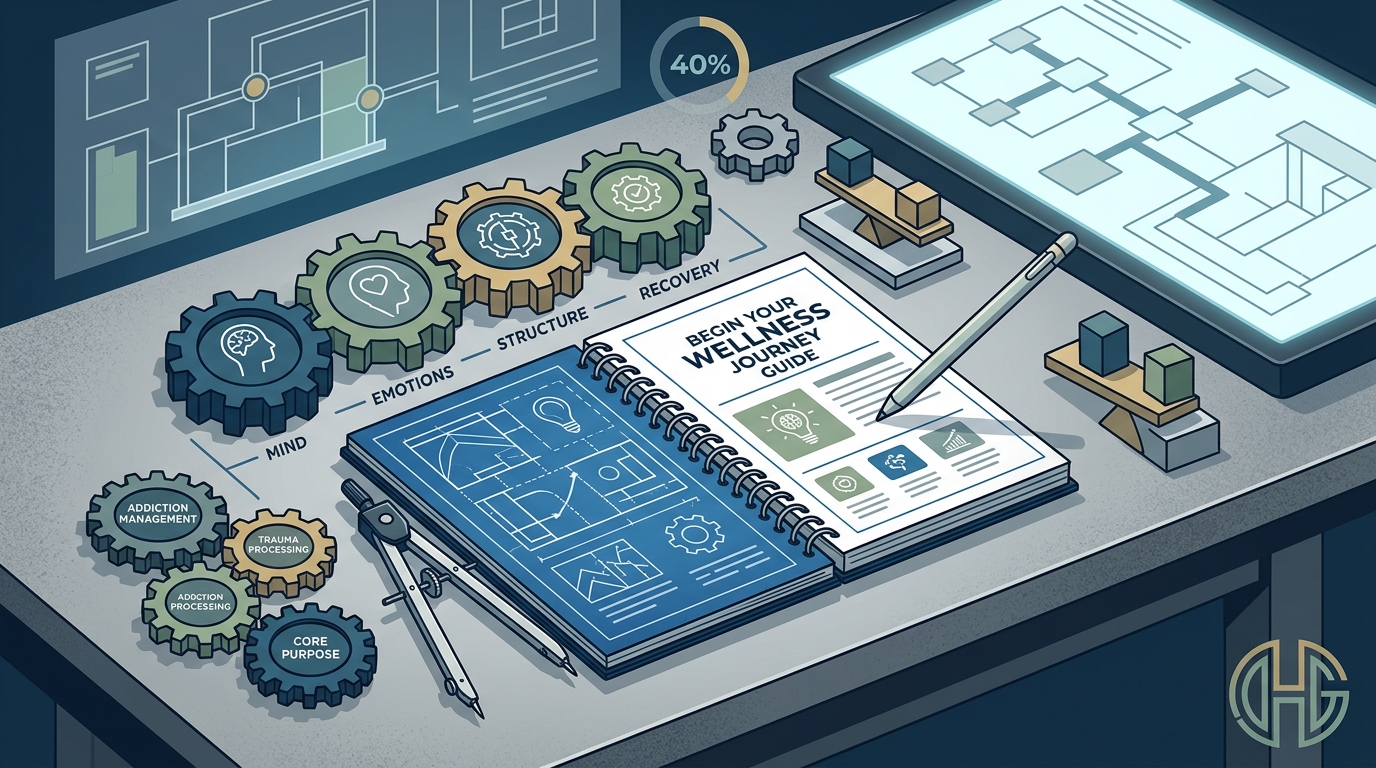
Most people view mental health improvement as a linear path of symptom management. This approach is fundamentally flawed. The Hallerman Group defines the architecture of wellness as a bespoke system that integrates clinical, legal, and strategic frameworks to create lasting transformation. This model recognizes that mental health issues, particularly those rooted in trauma or addiction, are often symptoms of deeper structural imbalances in one's life.
Wellness is not a destination. It is a continuous process of aligning your daily actions with your soul's purpose. When you begin this journey, you are not just seeking relief from pain. You are seeking to rebuild the foundation of your identity. This requires a shift from reactive coping to proactive design. The architecture of wellness provides the blueprints for this reconstruction, ensuring that every aspect of your life, from career to personal relationships, supports your mental health goals.
Traditional therapy often addresses the "what" of your pain. The architecture of wellness addresses the "why" and the "how." It asks how your professional life, your legal standing, and your personal history intersect to create your current state. By mapping these intersections, you can identify the leverage points for change. This holistic view is essential for anyone serious about long-term mental health improvement.
Identifying Your Specific Mental Health Needs
The first concrete step in your wellness journey is a rigorous self-assessment. You must identify whether your challenges stem from acute stress, chronic trauma, addiction, or a combination of these factors. Data shows that 70% of individuals seeking mental health support have underlying trauma that has not been fully addressed. Ignoring this root cause leads to recurring cycles of distress.
Consider the following categories to pinpoint your needs:
- Corporate Stress: High-pressure environments often lead to burnout and decision fatigue. If your mental health is declining due to professional demands, you need strategies for boundary setting and resilience.
- Addiction and Recovery: Substance use is often a maladaptive coping mechanism for unprocessed pain. Recovery requires more than abstinence. It requires a new identity and a new purpose.
- Trauma and PTSD: Past events can distort your present reality. Healing trauma involves rewiring neural pathways and reclaiming your narrative.
- Existential Crisis: A lack of purpose can lead to depression and anxiety. Reconnecting with your soul is essential for finding meaning.
Understanding your specific needs allows you to choose the right support system. Generic advice rarely works because it does not account for the unique complexity of your situation. By categorizing your challenges, you can seek out specialized resources that address the root of your issues rather than just the symptoms.
The Soulbriety Methodology: Healing the Root
At the core of the Hallerman Group's approach is the Soulbriety methodology. Soulbriety is a proprietary framework that combines clinical psychology, legal strategy, and spiritual wisdom to heal addiction and trauma. This approach is designed for individuals who have tried traditional methods without success. It recognizes that healing requires a multi-dimensional strategy.
The Soulbriety process involves three key phases:
- Heal Your Addiction: This phase focuses on breaking the cycle of dependency. It involves understanding the triggers and developing new coping mechanisms that do not rely on substances or behaviors.
- Reconnect with Your Soul: This phase involves exploring your deeper self. It helps you identify your core values and purpose. This connection provides the motivation for sustained change.
- Live Your Purpose: The final phase is about integration. You apply your newfound clarity to your daily life. This includes making strategic career moves, improving relationships, and engaging in meaningful work.
This methodology is not just theoretical. It is based on the lived experience of Dr. Elisa Hallerman, who overcame her own struggles with addiction while working as a Hollywood agent. Her journey provides a realistic roadmap for others facing similar challenges. The Soulbriety book serves as a primary resource for those beginning this journey, offering practical exercises and insights.
Corporate vs. Personal Wellness Pathways
Your wellness journey may take different forms depending on your context. For individuals, the path is deeply personal and introspective. For organizations, it involves systemic change and cultural shifts. Both pathways are valid and necessary for comprehensive mental health improvement.
| Pathway Type | Focus Area | Key Benefits | Recommended Resource |
|---|---|---|---|
| Personal Wellness | Individual trauma, addiction, and purpose. | Personal healing, identity reconstruction, and life alignment. | Begin Your Journey |
| Corporate Wellness | Team dynamics, burnout prevention, and leadership. | Increased productivity, reduced turnover, and improved culture. | Corporate Wellness Programs |
| Experiential Therapy | Hands-on healing through activities and nature. | Emotional release and non-verbal processing. | Experiential Therapy |
Corporate wellness programs are increasingly recognized as essential for employee mental health. According to a report by the World Health Organization, depression and anxiety cost the global economy an estimated $1 trillion per year in lost productivity. By investing in corporate wellness, organizations can mitigate these costs while supporting their employees. However, individual healing remains the foundation. Even in a corporate setting, personal wellness is critical for sustainable performance.
Taking the First Step: Working with Dr. Hallerman
Beginning your wellness journey requires courage. It involves confronting painful truths and committing to a new way of living. The Hallerman Group offers a structured pathway for this commitment. Dr. Elisa Hallerman provides personalized one-on-one sessions that guide you through the Soulbriety process. These sessions are designed to be transformative, offering both clinical expertise and strategic insight.
To start, you can read the book "Soulbriety: Heal Your Addiction, Reconnect with Your Soul, and Live Your Purpose." This book provides a comprehensive overview of the methodology and serves as a practical guide for self-reflection. It is an essential resource for anyone serious about mental health improvement. For those ready for deeper work, working directly with Dr. Hallerman offers a tailored approach to your unique challenges.
The process begins with a consultation. During this initial meeting, you will discuss your goals, your history, and your current challenges. Dr. Hallerman will then design a bespoke system of care that addresses your specific needs. This system may include clinical therapy, legal advice, and strategic planning. The goal is to create a holistic plan that supports your mental health from all angles.
Key Takeaways
- Holistic Approach: Mental health improvement requires integrating clinical, legal, and strategic frameworks, not just therapy.
- Soulbriety Method: The Soulbriety framework heals addiction and trauma by reconnecting individuals with their soul's purpose.
- Root Cause Analysis: Effective wellness journeys address the root causes of pain, such as unprocessed trauma, rather than just managing symptoms.
- Corporate Impact: Corporate wellness programs are critical for reducing the $1 trillion annual cost of depression and anxiety in the global economy.
- Personalized Care: Bespoke systems of care are more effective than generic advice because they address individual complexities.
- Dr. Hallerman's Expertise: Dr. Elisa Hallerman combines a PhD, JD, and personal experience with addiction to provide unique insights.
- Continuous Process: Wellness is a continuous journey of alignment, not a one-time fix.
Frequently Asked Questions
What is the Soulbriety methodology?
Soulbriety is a proprietary framework developed by Dr. Elisa Hallerman that integrates clinical psychology, legal strategy, and spiritual wisdom to heal addiction and trauma. It focuses on reconnecting individuals with their soul's purpose to achieve lasting recovery.
How do I start a wellness journey for mental health?
Start by assessing your specific needs, such as trauma, addiction, or stress. Then, consider reading the "Soulbriety" book or scheduling a consultation with Dr. Hallerman to create a bespoke system of care tailored to your situation.
What is the architecture of wellness?
The architecture of wellness is a model that structures mental health improvement by integrating clinical, legal, and strategic elements. It ensures that all aspects of an individual's life support their healing process.
Can corporate wellness programs help with personal mental health?
Yes, corporate wellness programs can provide a supportive environment that reduces stress and promotes healthy habits. However, they are most effective when combined with personal healing strategies like those offered by the Hallerman Group.
Who is Dr. Elisa Hallerman?
Dr. Elisa Hallerman is a strategist, author, and founder of the Hallerman Group. She has a PhD and JD and has overcome her own struggles with addiction, which informs her unique approach to mental health and recovery.
What are the benefits of experiential therapy?
Experiential therapy uses hands-on activities and nature to facilitate emotional release and non-verbal processing. It is particularly effective for individuals who struggle with traditional talk therapy.
How long does the Soulbriety process take?
The duration varies based on individual needs and goals. However, the process is designed to be transformative, with many clients experiencing significant shifts in their mental health and perspective within the first few sessions.
Where can I find more resources on mental health?
You can find more resources on the Hallerman Group blog, which offers articles on addiction, recovery, trauma, and mental health. You can also explore the press and media section for interviews and insights from Dr. Hallerman.
Begin Your Journey
Your mental health is the foundation of your life. Investing in it is the most important decision you can make. The Hallerman Group is here to guide you through this process with expertise, empathy, and a proven framework. Do not wait for another day to pass. Take control of your wellness journey today.
Begin Your Journey with Dr. Hallerman to start building your bespoke system of care. Or, Contact Us to schedule a consultation and learn more about how we can support your path to Soulbriety.