

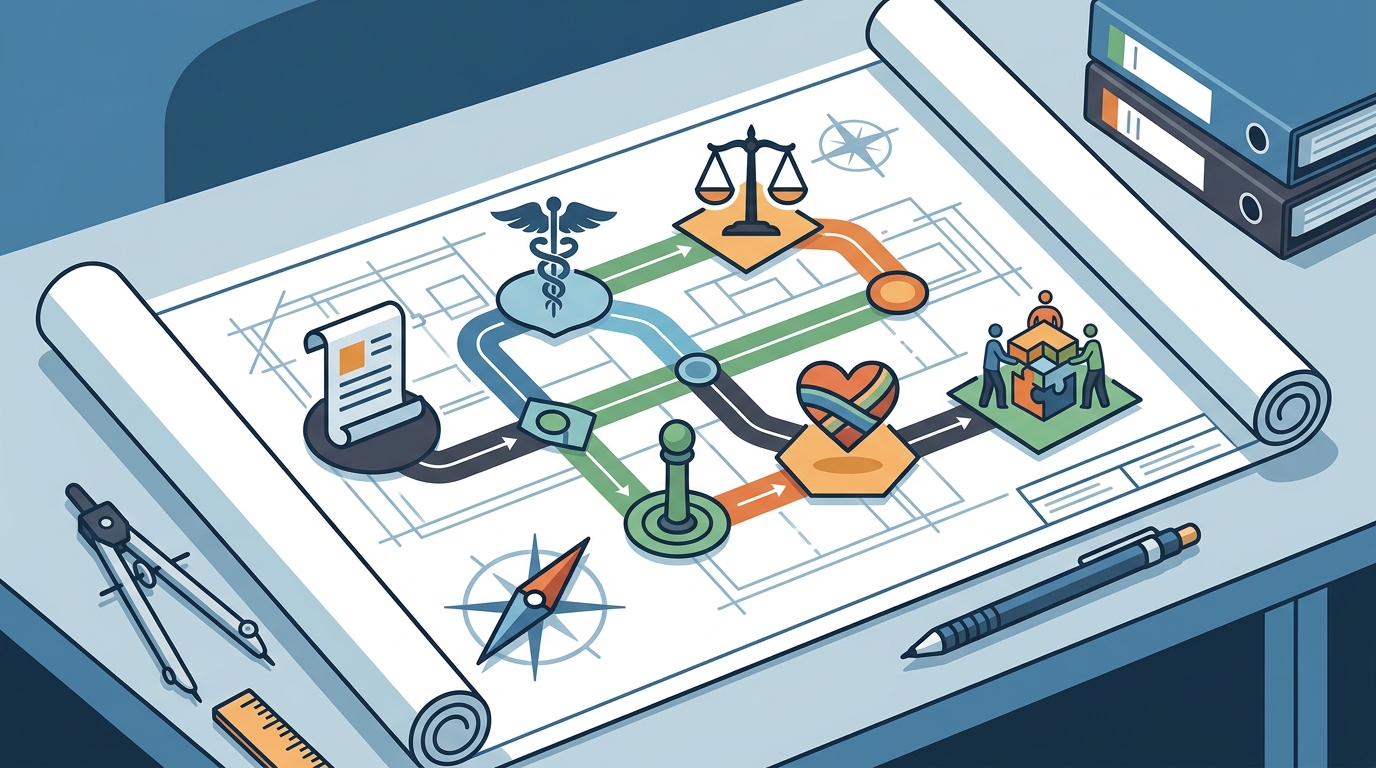
Starting a mental health wellness journey is no longer a passive choice but a strategic necessity for long-term resilience. According to recent public health data, substance abuse and mental health crises remain the number one cause of death among individuals aged 18 to 45. This statistic highlights an urgent need for structured intervention rather than isolated coping mechanisms. The architecture of wellness requires a deliberate framework that integrates clinical, legal, and emotional disciplines into one cohesive strategy. This guide outlines the precise steps to initiate that transformation with clarity and professional support. (Contact Us 045 The)
Understand the Architecture of Wellness
Before taking action, you must redefine what wellness means in a clinical and strategic context. Traditional case management often fails because it merely coordinates logistics without addressing the root causes of distress. True wellness is not just the absence of illness. It is the presence of a robust, integrated system that supports your mental, emotional, and physical health simultaneously. (Blog 045 The Hallerman)
Wellness is a proactive, integrated system of care that addresses the whole person rather than isolated symptoms. This approach moves beyond standard therapy by incorporating somatic, spiritual, and legal dimensions. For many, the complexity of navigating insurance, legal protections, and clinical care is overwhelming. Recognizing that you need a strategist, not just a therapist, is the first critical step. This shift in perspective allows you to view your mental health as a high-stakes project requiring expert management. (Dr Hallerman 039 s)
Research indicates that integrated care models significantly improve patient outcomes by reducing fragmentation in treatment. When legal and clinical perspectives are united, the path to recovery becomes clearer and more actionable. You are essentially hiring a family office for your well-being, ensuring that every aspect of your life is aligned with your health goals.
Assess Your Specific Needs and Triggers
The second step involves a rigorous self-assessment. You cannot build a framework for change if you do not know the foundation you are working with. This phase requires honesty about your current status, your triggers, and your desired outcomes. Are you dealing with acute trauma, chronic stress, or behavioral addiction? Each condition requires a distinct strategic approach.
Trauma is a psychological response to a distressing event that overwhelms an individual's ability to cope. It is not a sign of weakness but a physiological reaction that requires specific somatic and clinical interventions. Similarly, understanding the nature of your addiction is crucial. Addiction is a complex condition characterized by compulsive engagement in rewarding stimuli despite adverse consequences.
During this assessment, consider the following questions:
- What are the primary triggers that lead to emotional dysregulation?
- How does your current environment support or hinder your healing?
- What are your non-negotiable boundaries for safety and growth?
Documenting these insights creates a baseline for your professional consultations. This preparation ensures that when you engage with experts, you can communicate your needs with precision. It transforms vague feelings of distress into actionable data points that guide treatment planning.
Engage Professional Strategy
Once you have assessed your needs, the next step is to engage a professional who can architect your recovery. This is not a role for a generalist. You need a strategist who understands the intersection of law, psychology, and holistic healing. Dr. Elisa Hallerman, for example, brings dual expertise in law and depth psychology to design strategic solutions for complex human systems.
Working with a strategist means you are not just receiving therapy. You are receiving a comprehensive plan that addresses the logistical, legal, and emotional barriers to your wellness. This is particularly important for high-performing individuals who cannot afford the downtime associated with fragmented care. The Hallerman Group, for instance, creates bespoke systems of care that integrate these disciplines into a single, strategic framework.
When selecting a professional, look for the following credentials and approaches:
- Dual Expertise: Professionals who understand both the clinical and legal aspects of your situation.
- Bespoke Systems: Care plans that are tailored to your unique life circumstances, not cookie-cutter solutions.
- Confidentiality: A strict commitment to privacy, essential for high-profile or sensitive cases.
This step often involves completing a client information form to provide necessary background details. This document helps the strategist understand your history, current status, and specific goals. It is the foundation upon which your personalized wellness architecture will be built.
Integrate Experiential Therapy
Traditional talk therapy is often insufficient for deep-seated trauma and addiction. This is where experiential therapy becomes a critical component of your wellness journey. Experiential therapy uses active, hands-on techniques to help clients process emotions and gain insight. It moves beyond cognitive understanding to somatic and emotional integration.
Experiential therapy is a therapeutic approach that uses active, non-verbal techniques to help clients process emotions and gain insight. This might include art, movement, or guided visualization. For many, these methods bypass the defensive mechanisms of the conscious mind, allowing for deeper healing. When combined with clinical strategy, experiential therapy accelerates the recovery process.
Incorporating this into your routine requires a willingness to engage in new experiences. It is not about passive listening. It is about active participation in your own healing. This approach is particularly effective for those who have struggled with traditional therapy. It offers a fresh perspective and a new language for expressing pain and hope.
Build Sustainable Habits
The final step is to build sustainable habits that support your long-term wellness. Recovery is not a destination. It is a continuous process of maintenance and growth. This involves creating daily routines that reinforce your new framework. It might include mindfulness practices, regular check-ins with your strategist, and maintaining healthy boundaries.
Consider the concept of Soulbriety. Soulbriety is a soul-centered approach to recovery from addiction and trauma that emphasizes reconnecting with your inner purpose. This philosophy encourages you to look inward for strength and guidance. It is not just about stopping harmful behaviors. It is about starting meaningful ones.
To build these habits, start small. Focus on consistency rather than intensity. Each small step reinforces your new identity as a person in recovery. Over time, these habits become the foundation of your new life. They provide stability and resilience in the face of future challenges.
Key Takeaways
- Strategic Approach: Treat your mental health as a high-stakes project requiring expert management and integrated care.
- Professional Guidance: Engage a strategist with dual expertise in law and psychology for comprehensive support.
- Experiential Methods: Incorporate active, non-verbal therapies to process deep-seated trauma effectively.
- Soul-Centered Healing: Adopt frameworks like Soulbriety to reconnect with your inner purpose and resilience.
- Continuous Maintenance: View wellness as a continuous process of habit building and boundary setting.
- Confidentiality: Prioritize providers who offer strict privacy and bespoke systems of care.
- Urgency: Recognize the critical nature of early intervention in preventing severe health outcomes.
Frequently Asked Questions
What is the difference between case management and wellness architecture?
Case management typically coordinates logistics and assigns staff to manage care. Wellness architecture, however, designs a comprehensive system that integrates legal, clinical, somatic, and spiritual dimensions into a single strategic framework. It is more discerning and deeply informed, functioning like a family office for your well-being.
How does Dr. Hallerman's background help in recovery?
Dr. Elisa Hallerman brings dual expertise in law and depth psychology. This allows her to design strategic solutions for complex human systems that address both the clinical and legal aspects of your situation. She unites these perspectives into one actionable plan, providing a unique advantage in navigating recovery.
What is Soulbriety and how can it help me?
Soulbriety is a soul-centered approach to recovery from addiction and trauma. It focuses on healing your trauma, overcoming addiction, and reconnecting with your soul. This method emphasizes inner strength and purpose, helping you find meaning beyond your symptoms.
Is experiential therapy effective for trauma?
Yes, experiential therapy is highly effective for trauma. It uses active, hands-on techniques to help clients process emotions that may be difficult to articulate verbally. This approach bypasses defensive mechanisms and allows for deeper emotional integration and healing.
How do I begin the process with The Hallerman Group?
You can begin by completing the Client Information Form on their website. This form helps them understand your specific needs and history. From there, you can schedule a consultation to discuss your bespoke system of care and begin your journey toward wellness.
What are the signs that I need a wellness strategist?
If you feel overwhelmed by the complexity of managing your mental health, legal issues, and daily life, you may need a strategist. This is particularly true if you have tried traditional therapy without success or if your situation involves complex legal or financial implications.
Can wellness architecture help with corporate stress?
Absolutely. The Hallerman Group offers corporate wellness services designed to help organizations and individuals manage stress and prevent burnout. This approach integrates clinical and emotional disciplines to create a healthier, more productive work environment.
Begin Your Journey Today
The path to mental health improvement is complex, but you do not have to walk it alone. By understanding the architecture of wellness, assessing your needs, and engaging professional strategy, you can build a framework for lasting change. The Hallerman Group offers the expertise and bespoke systems of care necessary to guide you through this transformation. Take the first step toward your Soulbriety. Begin Your Journey with Dr. Elisa Hallerman today and reclaim your life with dignity and wholeness.